
When a sewer line needs more than cleaning
Your sewer line, or sewer lateral, carries every drain in the house out to the public sewer main. Clearing a clog fixes the symptom. When the pipe itself is broken, sagging or full of roots, the clog keeps coming back until the line is repaired.
- Backups or slow drains that return a few weeks or months after cleaning
- Water coming up in a basement floor drain or tub when you flush or run the washer
- Gurgling toilets and drains throughout the house
- Sewer odors in the basement or yard
- Soggy, sunken or extra-green spots over the line
Camera inspection first
We don’t guess. Before recommending a repair, we run a sewer camera through the line to see exactly what’s going on and where. You see the footage too. Common findings include:
- Tree roots growing into joints, especially in older clay tile pipe
- Cracked, offset or separated joints in clay and cast iron lines
- A “belly”, a sagging section where waste and water collect
- Collapsed pipe, including older fiber pipe that can flatten over time
- Heavily corroded cast iron that has narrowed the inside of the pipe
Spot repair or full replacement?
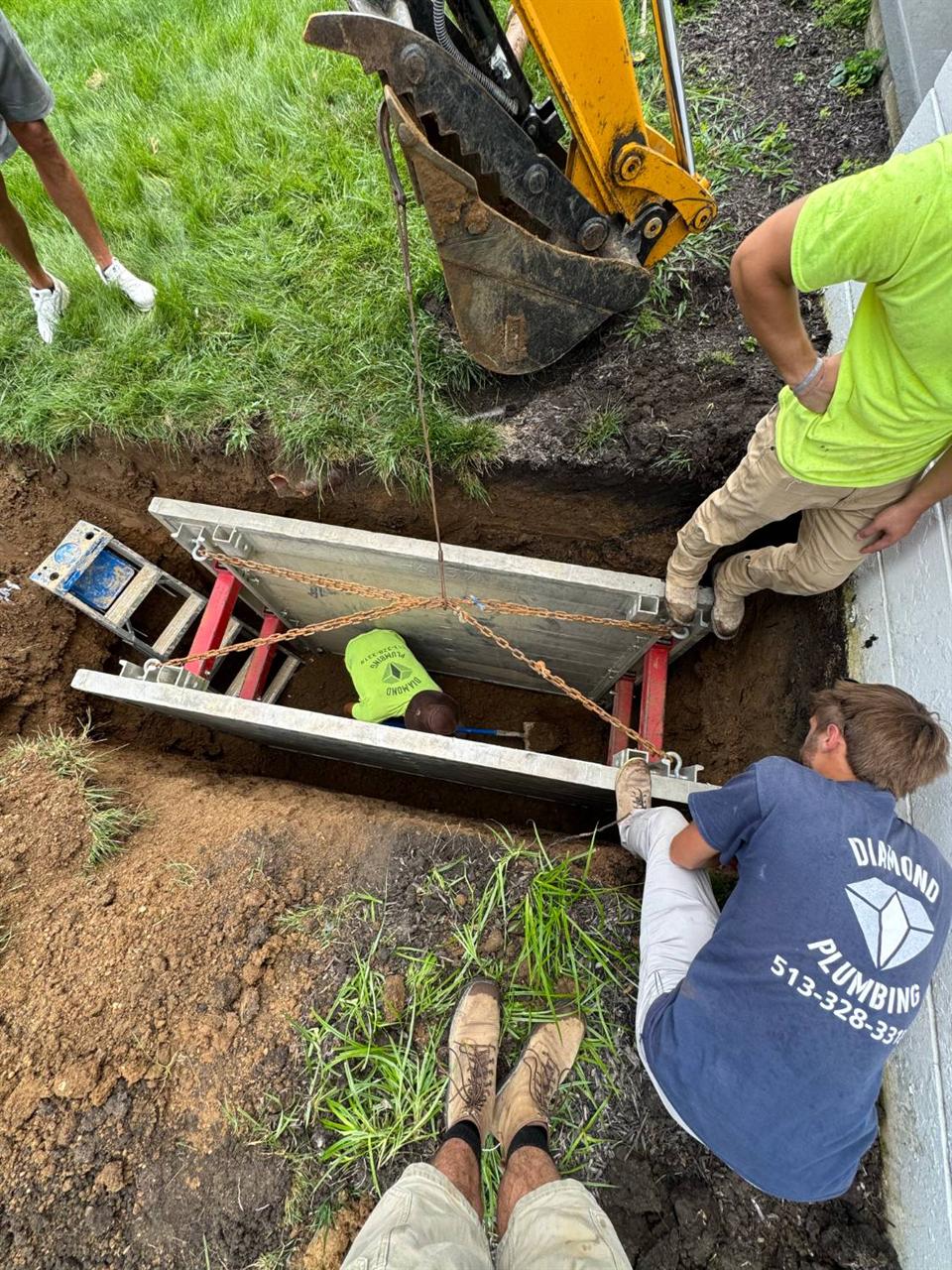
If the damage is limited to one section of an otherwise sound line, a spot repair can be the most economical fix. If the camera shows problems along much of the line, or the line has already been repaired before, full replacement is usually the better investment. A new PVC line installed at the proper slope solves the problem for decades instead of until the next backup. We’ll show you the footage and explain both options and their pricing before any work begins.
How a sewer line replacement works
- Camera inspection and locating to find the line’s route, depth and problem areas
- 811 utility locates and permits, handled by us
- Excavation by our own crew, with trench shoring on deeper digs for safety
- New PVC sewer line at the correct slope, often with a new cleanout for easy future access
- Inspection, backfill and clean-up, with lawn restoration expectations explained up front
Need the line repaired under the basement floor instead? We cut and remove the concrete, replace the damaged pipe and patch the slab. Financing is available. Learn about financing and discounts.
Sewer line replacement FAQs
Who is responsible for my sewer line?
In most communities, the homeowner is responsible for the sewer lateral from the house to the connection at the public sewer main, including the section under the yard. Rules vary by sewer district, so we’ll help you confirm what’s yours.
How long does a sewer line replacement take?
Many residential sewer line replacements take one to two days, depending on the length and depth of the line, what’s in the way, and inspection scheduling. We’ll give you a realistic timeline with your quote.
Can I use my plumbing during the replacement?
You’ll need to limit or stop using drains while the old line is disconnected and the new one is tied in. We’ll let you know exactly when, and we work to keep that window as short as possible.
Will cutting out the roots fix my sewer line?
Cutting roots restores flow, but roots get in through cracks and joints and will grow back. If roots keep returning, repairing or replacing the damaged section is the permanent fix.